
Refugia
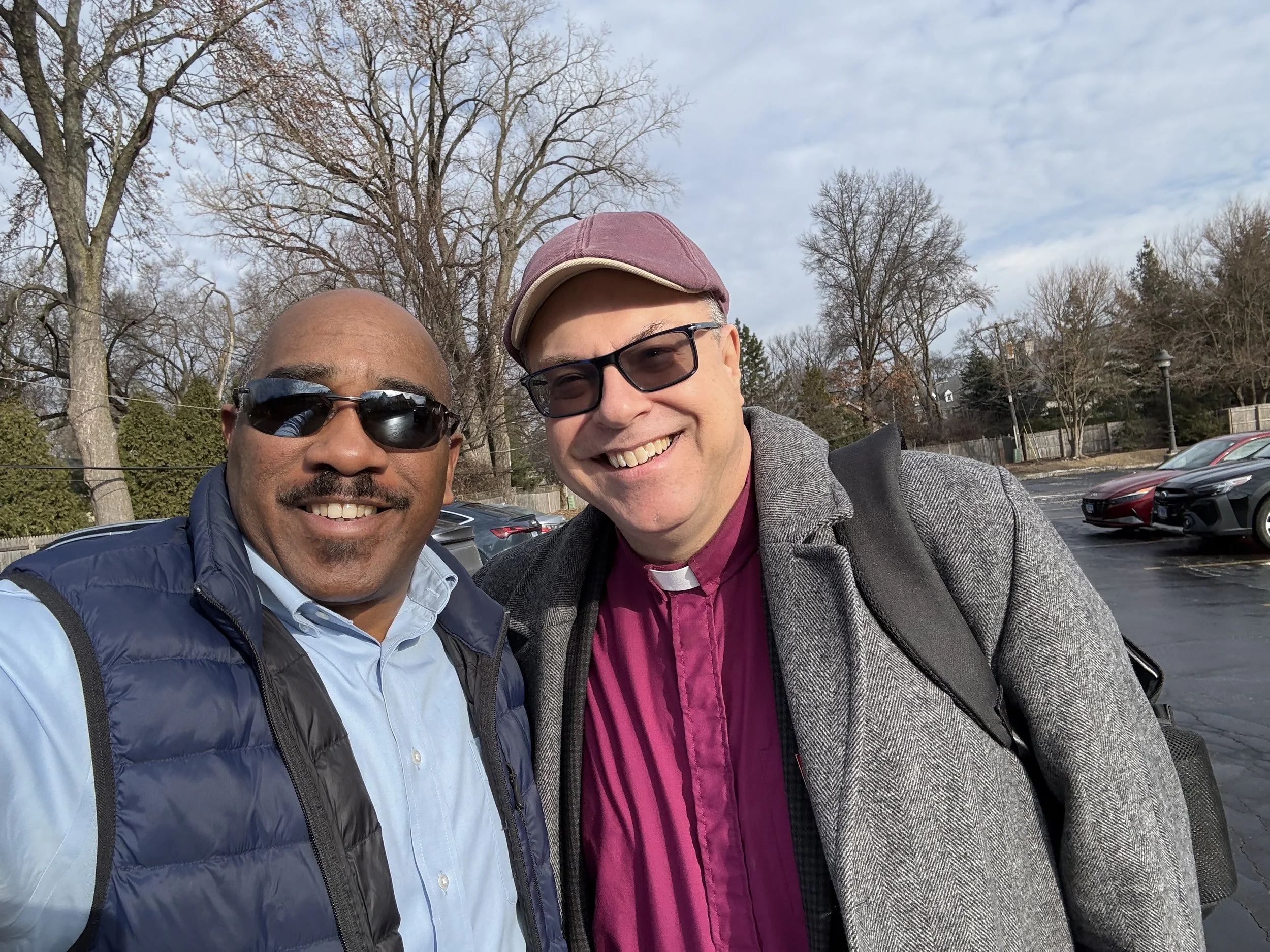
Re. Jon McCoy with Bishop Dan Schwerin
3 Then the word of the Lord came to me a second time: 4 “Take the belt you bought and are wearing around your waist, and go now to Perath and hide it there in a crevice in the rocks” (Jeremiah 13:3-4)
As I attended the second set of annual conferences last week (the first in the Illinois Great Rivers Conference and, most recently, in the Northern Illinois Conference), I was delighted to learn a new word that was introduced by Bishop Dan Schwerin and expounded upon by Sally Vonner, the General Secretary/CEO of the United Women of Faith. Refugia is a concept that “has been adapted by authors, theologians, and philosophers to describe physical, spiritual, or social hidden shelters. In times of cultural, political, or ecological crisis, ‘people of refugia’ seek to cultivate ordinary wonders, protect the vulnerable, and build resilience.” The term refugia is derived from the Latin word for "refuge" or "shelter.”
The instruction that was given to Jeremiah (referenced in the scripture at the beginning of the article) to hide the valuable belt in the cleft of the rock to protect it refers to the need for vigilance in the face of vulnerability. Objects, ideas and even truths are sometimes hidden from those who would seek to destroy them. Sacred Biblical texts are discovered buried in caves to protect and preserve them from those who sought to deny the records of the presence of God and the perseverance of the people.
Because of the pervasiveness of the threats of harm to both laity and clergy, the details of some reports were omitted during the presentations at the annual conference. Bishop Schwerin described traveling to various parts of the city where citizens were being abducted and discovering that the signal to his mobile phone had been blocked. He also described the anguish experienced by families, congregations and pastors as they developed arrangements for the care of children if their parents were unable to return home. It wasn’t surprising for Rev. Vonner to incorporate refugia into the Bible studies that she led. Her undergraduate degree is in biology. Refugia is also defined as “a dedicated sanctuary—either an aquarium compartment or a geographic area—where specific plants, animals, or macroalgae are protected.”
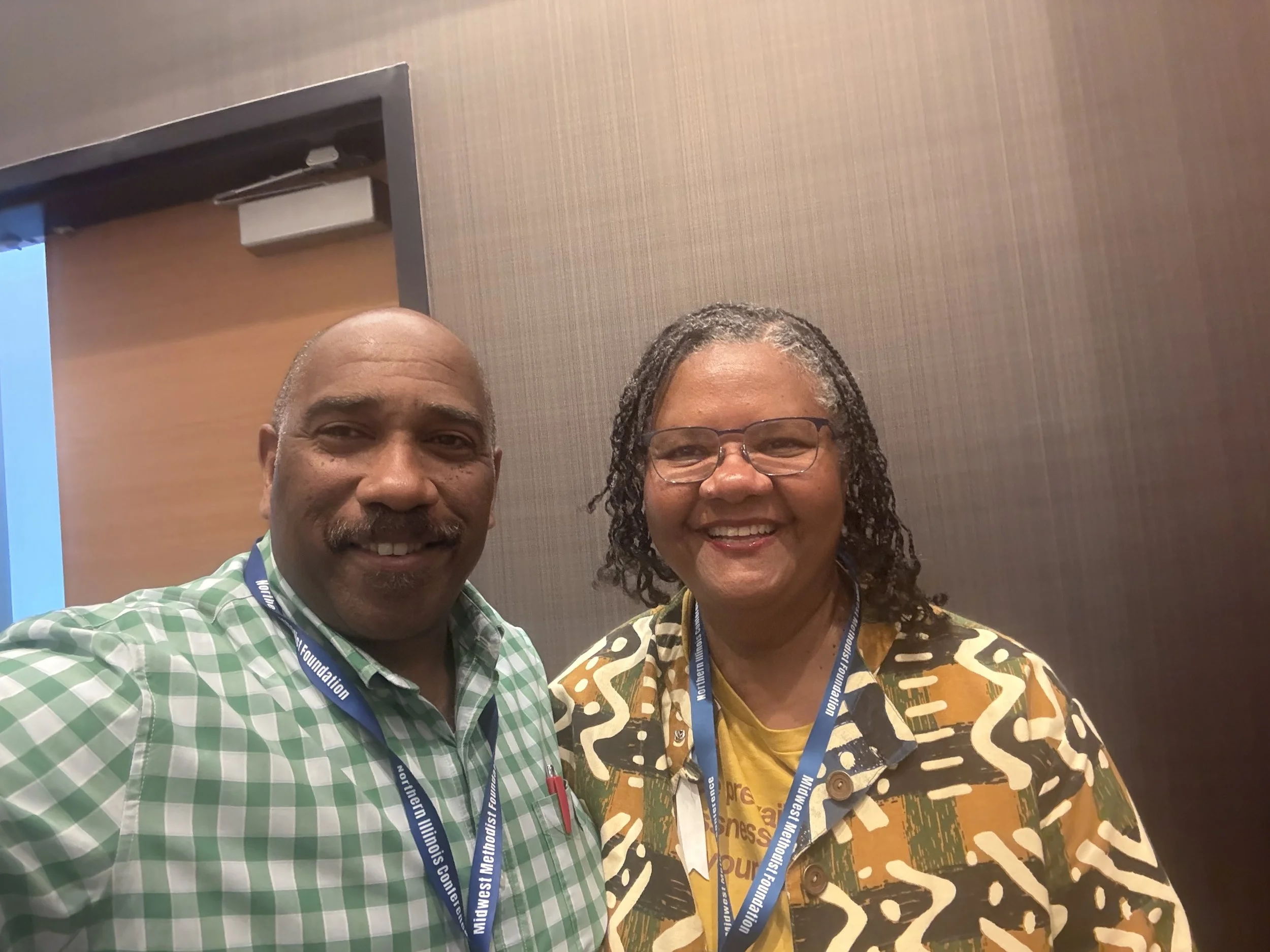
Re. Jon McCoy with Sally Vonner
The protections that are provided are often so subtle, yet effective, that they are not noticed or appreciated immediately, if at all. As I continue to reflect upon my experiences as a child and an adolescent in Mississippi and during my travels, I was repeatedly and lovingly sheltered from the many torrents that could have been destructive and discouraging. As we prepare to celebrate Father’s Day, I am even more aware of the things my father did to provide not only a home, but a community that continually proves to be a sanctuary in which the desires of God can be known and pursued.
Discerning the will of God requires listening and the willingness to learn. In our most recent staff meeting, we continued our redirections using Scott Cormode’s book “The Innovative Church: How Leaders and Their Congregations Can Adapt in an Ever-Changing World.” Cormode identified four types of listening: (1) listening to God; (2) listening to Scripture; (3) listening in community, and (4) listening to the people entrusted to our care. I pray that we will all spend even more time listening to what is said and what is communicated in the silences.
We are looking forward to seeing you in worship, in class, around the church and throughout the community. Also, please remember to “wear your uniform” (that is your favorite T-shirt or sweatshirt that has the church logo on it) whenever possible/appropriate, especially when you are representing the church or participating in an event around town.
In Christ,
Jon McCoy
