
Calling on Fire
6 God is just: He will pay back trouble to those who trouble you 7 and give relief to you who are troubled, and to us as well. This will happen when the Lord Jesus is revealed from heaven in blazing fire with his powerful angels. (2 Thessalonians 1)
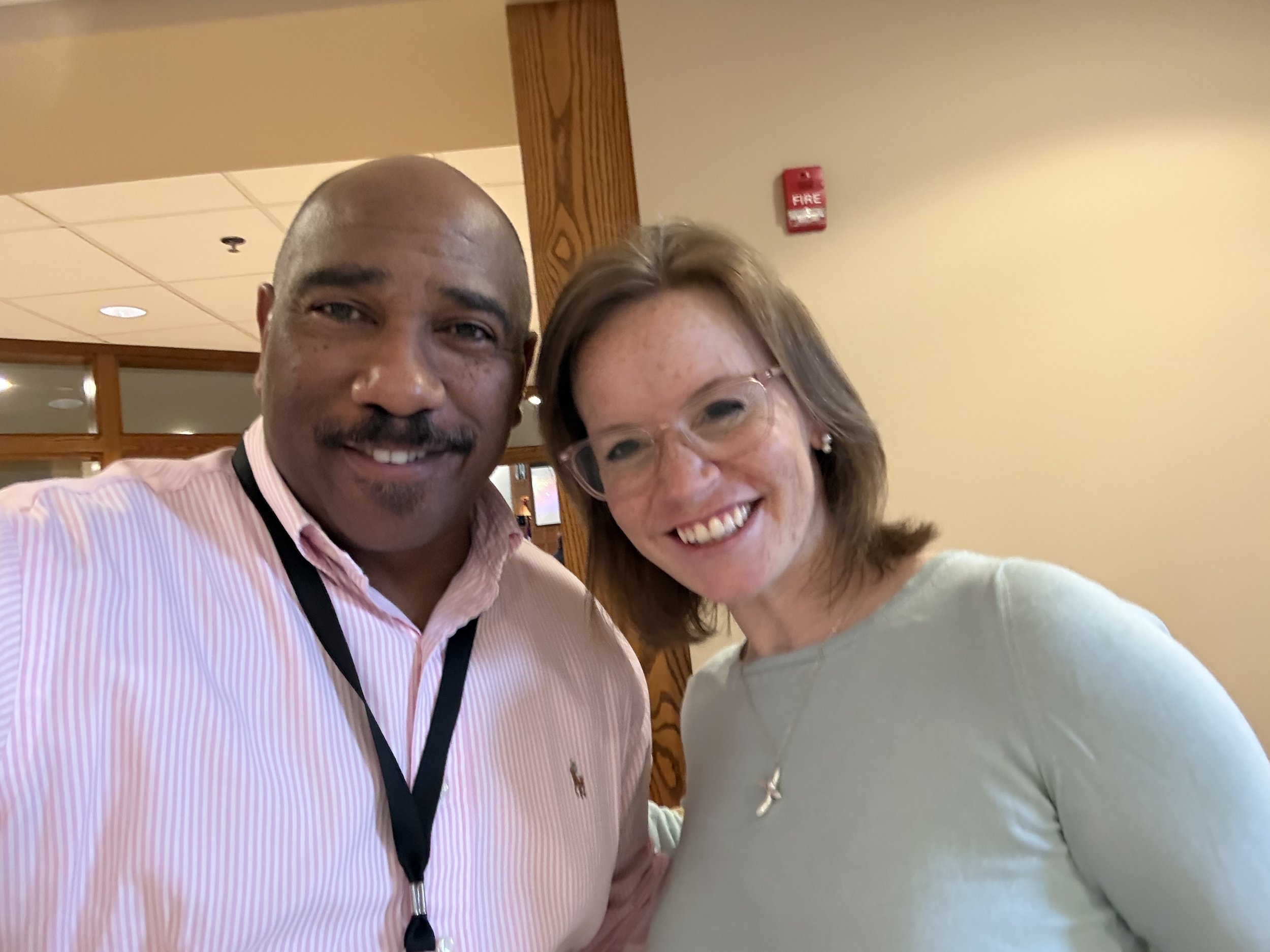
Recently, many of the clergy from the Illinois Great Rivers Conference met in Belleville, Illinois for a “Day Apart with the Bishops.” Bishops David Bard and Kennetha Bigham-Tsai were joined by Rev. Dr. Ashley Boggan, the General Secretary of the Board of Archives and History. Dr. Boggan inspired those gathered by incorporating information from two of her most recent books “Wesleyan Viletality: Reclaiming the Heart of Methodist Identity” and “Calling on Fire: Reclaiming the Method of Methodism.” She highlighted the importance of (re-) embracing the passions for the poor and those who are maligned to help revitalize and reinvigorate the people and the congregations of The United Methodist Church.
Many of us can still recall our first experiences in which we learned to respect the power of fire. My disdain for residential fireworks is related to both my experience of having a firecracker explode in my hands as a child and simply because I’m frugal—I find little pleasure in watching my hard-earned money “go up in a puff of smoke.” I learned “the hard way” that it isn’t possible for a child to extinguish a sparkler in my hand like the performers at the circus. I also learned that the glow of a fire on a cold day or the sounds of fireworks could attract and hold the attention of a large crowd.
While many historians now argue that John Wesley did not describe the secret of the popularity of his preaching as “I set myself on fire and people come to watch me burn,” Wesley did speak about the zeal for Jesus and the compassion for the oppressed as essential qualities among the characteristics of a Methodist. Wesley is acknowledged as having said “I am not afraid that the people called Methodists should ever cease to exist either in Europe or America. But I am afraid lest they should only exist as a dead sect, having the form of religion without the power.”
During this season of Lent in which we carefully as consistently examine ourselves to identify the bad things that we should abandon to make room for the good things that we embrace, let us pray that we may be engaged daily in the world around us in ways that others will see us as powerful angels of God.
Many of us learned about the Wesleyan Quadrilateral—Scripture, Tradition, Experience and Reason—during confirmation classes. Ashley introduced the concept of the “Practical Quadrilateral”: (1) Field Preaching; (2) Micro-Communities; (3) Social Engagement; and (4) Leadership Activation. Near the end of day’s presentation, she challenged us to answer the question, “where are the fields of Bristol? where are we being sent to help those who are poor and those who need to be supported?”
Together, let us feel the fire, follow the flame and share the spark that allows all of us to reflect the love and light of Christ. We’ll see you in class, in worship and on the mission field.
In Christ,
Jon McCoy
