
A House of Prayer
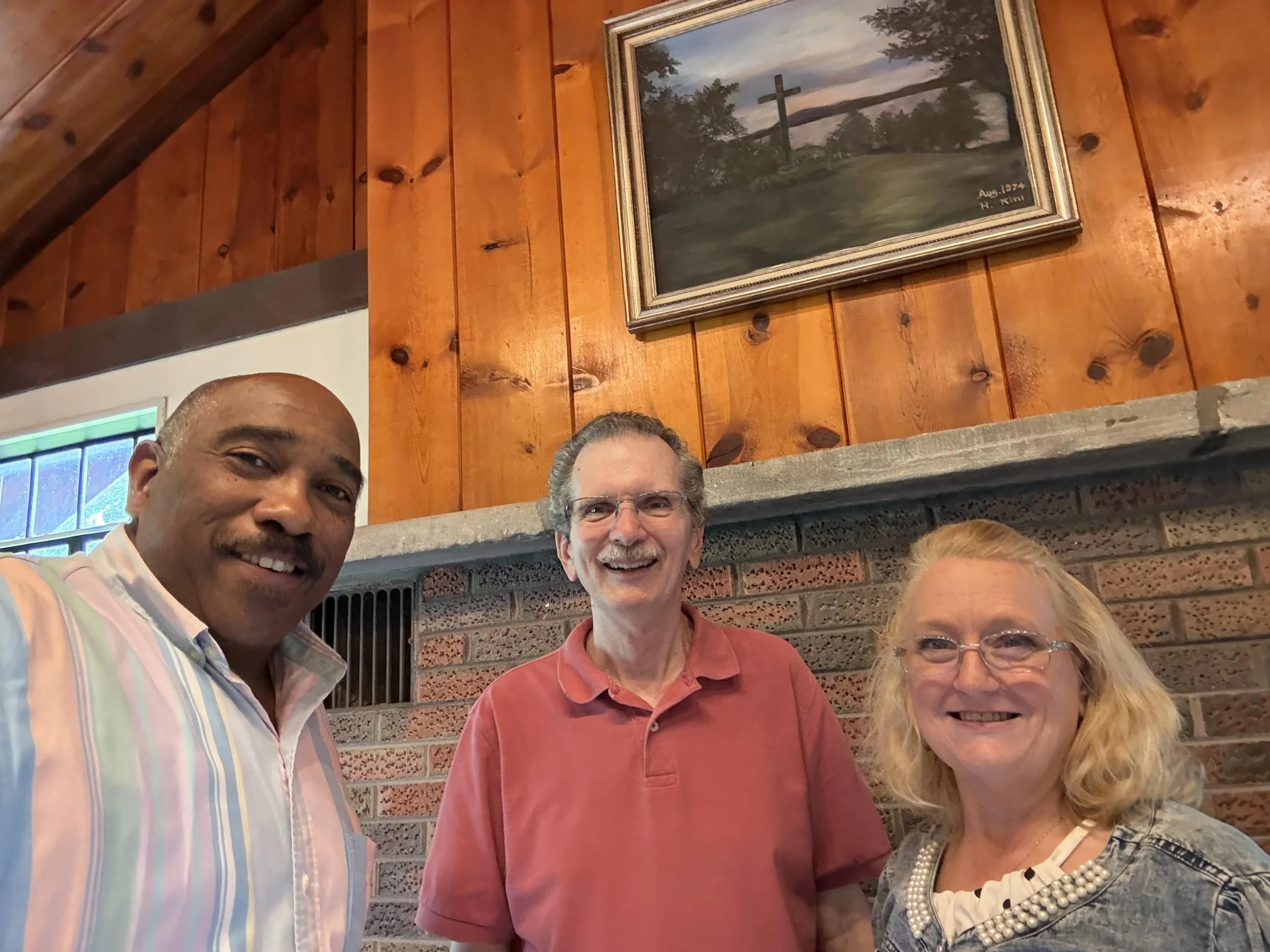
Earlier this week, I participated in a Prayer Retreat at East Bay Camp that was led by Joe Richard, a retired United Methodist Elder. The day of prayer began with a reflection upon the Word of God as recorded by the prophet Isaiah—“…these I will bring to my holy mountain and give them joy in my house of prayer” (56:7). The broader context of the key verse identified the intended recipients of this proclamation to be (1) those who minister to the Lord, (2) those who keep the Sabbath, and (3) those who hold fast to God’s covenant. The passage concluded with an expansive assertion that declared “I will gather still others to them besides those already gathered” (56:8).
Prayer retreats are relatively rare for some laity and clergy. They often prove to be extended contemplative moments in which people grapple with existential questions such as “what am I called to accomplish in this season of life?” and “what changes will be necessary to improve my effectiveness?” These moments can be spent alone or may be used as opportunities for groups to connect. One of the most impactful elements of a retreat is the serenity of the location. East Bay Camp includes over 160 acres nestled along Lake Bloomington in Hudson, Illinois. Between the instructional sessions, participants were allowed time to observe and experience some aspects of the camp while reflecting upon the material that had been discussed.
Among the many books, articles and exercises that were introduced, a particular highlight of the retreat was the introduction to different categories of prayer included in the book “Flood Gates: Holy Momentum for a Fearless Church” by Sue Nilson Kibbey. She described three styles of Revolutionary Prayer: (1) the Threshold Prayer, (2) the Archer’s Prayer and (3) the Prevailing Prayer. The Threshold Prayer was described as a prayer that seeks proximity to God or a positioning to discern the will of God. Unlike a prayer that seeks a specific outcome, the Threshold Prayer“ presents our current reality to God.” The Archer’s Prayer is distinguished because of its focus upon a specific target. In these prayers, the desired outcome may not be clear, but the group, rather than a single individual, prays collectively for a transformation. The Prevailing Prayer is described as a revolutionary movement in which everything is viewed “as a platform and opportunity” for prayer. The entire congregation becomes engaged in the prayer movement.
These categories of prayer could be conceptualized as spheres, or small circles, that begin within an individual and expand to ultimately include those who were not initially envisioned as participants. Prayer, which is often described simply as a conversation with God, sometimes begins as a connection of last resort when all other possibilities have been exhausted. Some individuals seek the will of God as a starting point and begin to reach out to others to get support or corroboration for prayer. However, the change that has begun within the individual can gradually impact those who have been included or invited into the widening circle of prayer.
Prayer can seem intimidating and many people are reluctant to pray, especially publicly, for fear of “doing it wrong.” Fortunately, and ironically, the apostle Paul offers peculiar insight and assurance that we are doing it wrong! In the book of Romans, Paul says “we do not pray as we should” (v. 26). However, Paul immediately reassures us that the Holy Spirit intercedes “for God’s people in accordance with the will of God” (v. 27 NIV). This reassurance is helpful not only for the timid individual who is often unfamiliar with prayer as a habit of “godly" people. This reassurance is also helpful for those who may be invited to assist by praying with someone. However, as the two engage in a conversation together with God, they are both potentially changed by the awareness that the will of God is accomplished not because of the accuracy or appropriateness of the words that we have chosen.
As the sphere of those who participate in the acts of prayer together expands, more and more people are incorporated into the practice of prayer. The specificity of the Archer’s Prayer can be broadened to include more people who are engaged in the act of prayer without becoming too concerned about the details of the prayers. The transformative power of prayer is not necessarily experienced because of the specificity, but because of the breadth of the group involved in the conversations with God. The act of prayer becomes a practice of prayer and ultimately a habit of prayer.
Prayers that may have been initiated as a last resort or an act of desperation, can gradually become habits that offer an assurance that only God can provide. While the gathering scripture from Isaiah that referenced a holy mountain can seem to be a most unlikely starting place for a campground bordered by fields of corn in the middle of Illinois known for its relatively flat terrain, the symbolism was adequate for the small balcony that overlooked the lake. Even though Joe only played the piano once, the setting was more than sufficient to inspire a flow of hymns that seemed ideal to include in the worship services. The phrase “house of prayer” was so close to the title “Sweet Hour of Prayer” that I heard the song endlessly throughout the retreat. Beyond the beauty of the title were the poignant lyrics “in seasons of distress and grief, my soul has often found relief.”
Amazingly, another song was also promoted by the expanded reading of Isaiah’s words. God said I will “give them joy in my house of prayer” [emphasis added] (56:7). I also thought of the songs “House of the Lord” by Phil Wickham and “Joy” by Kirk Franklin. Too often, contemplation seems to be associated with sadness. For some people, the only reasons to pray or to come to the house of prayer is in times of anguish or grief. While those are appropriate times to come, they are not the only times to come. The time away “on the holy mountain” was an opportunity to reflect upon the beauty of God’s creation while the noise of the world could be silenced (if only for a few brief moments) and the promises of God could be pondered.
Another helpful element of the prayer retreat was the reminder of the often used acronym for the basic structure of a prayer—ACTS: Adoration, Confession, Thanksgiving, and Supplication. As our prayers begin with words of adoration of God, we also quickly confess the ways we have failed God through betrayal, hatred, fear and more. Yet, we are thankful for the mercy and grace of God. Finally, we arrive at “the ask.” We describe what we want and need from God. We ask God to help us to receive the things God desires for us and we ask God to increase our desire to please God rather than ourselves (cf. Matthew 26:39, Mark 14:36 and Luke 22:42).
As we continue to prepare and celebrate the beginning of a new season of learning and laughter as the new academic year begins, we are rallying the members of the congregation to pray for the children, the youth, the young adults and the older adults. We pray that this time of year will be marked not only as a time to go back to school, but also a time to come to the house of prayer and a time to experience God’s joy on this holy mountain. As you drive past a school, any school, from Merry Sunshine to Scott Community College, whisper a prayer for the students; for those longing to learn, and for those longing to grow. May we pray continually and collectively that God’s joy will give us all strength and peace.
We will see you in worship, in class and in the mission field.
In Christ,
Jon McCoy
